Estate Planning
Your Plan Today. Your Family's Protection Tomorrow.
Estate planning is about more than documents. It's about protecting the people you love, preserving what you've built, and ensuring your wishes are honored when you can no longer speak for yourself.
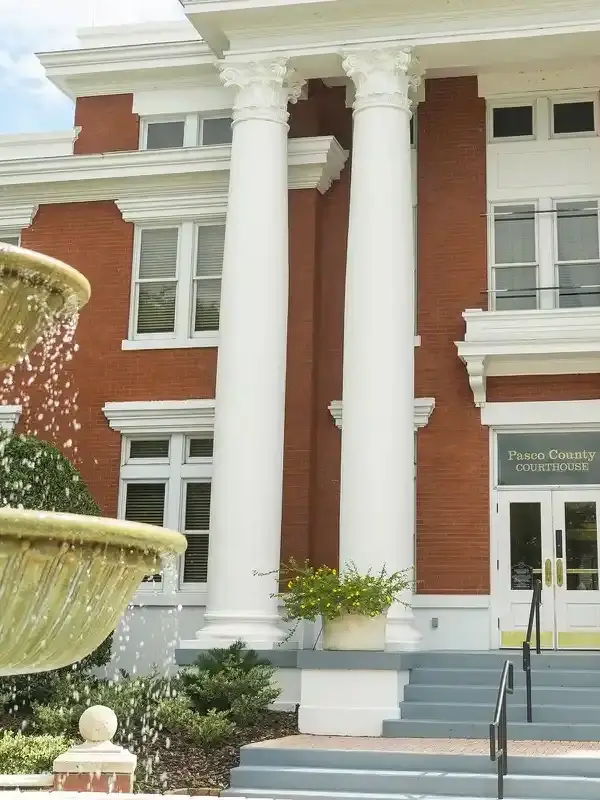
Auvil Walters is a trusted name in Dade City, helping local families create comprehensive estate plans that provide peace of mind for generations.
What Happens Without an Estate Plan in Florida?
Many people delay estate planning, assuming they have time or that their family will simply "figure it out." The reality is far more complicated and can be devastating for the people left behind.
Florida's Intestacy Laws Decide for You
If you die without a will in Florida, the state's intestacy laws determine who receives your assets. These laws may not match your wishes at all:
- Stepchildren receive nothing unless legally adopted
- Long-term partners without marriage have no inheritance rights
- Estranged relatives may inherit over close friends or caregivers
Common Misconception: "My spouse will get everything." In Florida, if you have children from a previous relationship, your spouse only inherits half of your estate. Your children from the prior relationship receive the other half, which can force the sale of the family home.
Your Minor Children Need Protection
Without a will naming a guardian, upon the passing of a surviving parent, a court typically decides who raises your children. This decision may go to a relative you would never have chosen, or could result in lengthy court contests between family members while your children wait in uncertainty.
Incapacity Can Be Worse Than Death
Without proper planning documents, if you become incapacitated due to illness or accident, your family cannot access your accounts, pay your bills, or make medical decisions on your behalf. They would need to petition the court for guardianship, a costly, time-consuming, and public process. This can often be avoided by a Durable Power of Attorney and a Healthcare Surrogate Designation.
Our Florida Estate Planning Services
Wills in Florida
A properly executed Florida will ensures your assets pass according to your wishes, not state law.
- Last Will and Testament
- Pour-Over Wills
- Guardian Designations
- Specific Bequests and Gifts
Trust Planning
Trusts provide flexibility, privacy, and probate avoidance that wills alone cannot offer.
- Revocable Living Trusts
Power of Attorney
Designate trusted individuals to manage your financial affairs should you become unable to do so.
- Durable Power of Attorney
- Limited Power of Attorney
Healthcare Directives
Ensure your medical care preferences are known and respected by healthcare providers and family.
- Healthcare Surrogate Designation
- Declaration of Living Will
Lady Bird Deeds for Florida Homesteads
For clients who want to keep their home out of probate without creating a full trust, Florida recognizes "Lady Bird" deeds (enhanced life estate deeds). Named after the wife of President Lyndon B. Johnson, this powerful estate planning tool allows you to transfer your home to beneficiaries upon death while retaining full control during your lifetime.
What Makes a Lady Bird Deed Different
A Lady Bird deed is an enhanced life estate deed that provides significantly more flexibility than a traditional life estate deed. The critical difference lies in what you can do during your lifetime:
- Sell or mortgage the property without needing consent from your beneficiaries (called "remaindermen")
- Revoke the deed entirely and change your mind about who inherits the property
- Keep all rental income and make all decisions about the property
- Retain homestead exemption and all property tax benefits during your lifetime
With a traditional life estate deed, you would need your beneficiaries to sign off on any sale or mortgage, which can create serious problems if they refuse, become incapacitated, or cannot be located.
Key Advantage: A Lady Bird deed is fully revocable. If your circumstances or wishes change, you can simply record a new deed. You are not locked into your decision the way you would be with a traditional life estate or outright gift.
Benefits of Lady Bird Deeds in Florida
- Probate avoidance: Upon your death, the property easily transfers to your named beneficiaries without going through probate court
- Medicaid protection: Lady Bird deeds are not considered a transfer of assets for Medicaid eligibility purposes and are not subject to the five-year lookback period. The property is also protected from Medicaid estate recovery after death
- Stepped-up tax basis: Your beneficiaries receive the property at its fair market value as of your death, not what you originally paid. This can eliminate significant capital gains taxes when they sell
- Homestead protection: Your homestead exemption and property tax benefits remain intact during your lifetime
- No gift tax: Because you retain control and can revoke the deed, creating a Lady Bird deed is not a completed gift for tax purposes
- Simplicity: Less complex and less expensive than creating and funding a revocable living trust
Florida Homestead Restrictions: If you have a surviving spouse or minor child, Florida's constitution places restrictions on how you can dispose of your homestead. You cannot use a Lady Bird deed (or any other method) to completely disinherit a surviving spouse or minor child from your homestead property. If you are married or have minor children, we will discuss how these protections affect your options.
Is a Lady Bird Deed Right for You?
Lady Bird deeds work particularly well for:
- Single or widowed individuals with no minor children who want simple probate avoidance
- Property owners who may need to sell or refinance in the future
However, a Lady Bird deed only covers the specific property named in the deed. If you have multiple properties or significant non-real estate assets, a revocable living trust may be a more comprehensive solution. We can help you evaluate which approach best fits your complete estate planning goals.
Florida Will Requirements
A will without proper formalities is invalid in Florida.
Unlike some states, Florida does not accept "holographic" (handwritten, unwitnessed) wills. Even if clearly written in your own hand, a will without proper witnesses is invalid in Florida.
Self-Proving Wills
While not required for validity, we strongly recommend making your will "self-proving" by having it notarized. A self-proving will can be admitted to probate without requiring witness testimony, speeding up the process for your family.
Moved to Florida Recently?
Florida has unique rules regarding who can serve as personal representative, homestead property protections, and other matters that may affect how your plan works in practice. We recommend having your existing estate plan reviewed by a Florida attorney to make sure everything functions as intended under Florida law.
Probate Avoidance in Florida
Many Florida families choose trust-based estate plans to avoid the delays, expenses, and public nature of probate. A properly funded revocable living trust can transfer assets to your beneficiaries without court involvement.
Benefits of a Living Trust
- Avoids probate court entirely
- Faster distribution to beneficiaries
- Privacy (trusts are not public record)
- Avoids probate in multiple states
- Incapacity planning built in
- More difficult to contest than wills
Important Considerations
- Assets must be transferred to the trust
- Requires more upfront work than a will
- Higher initial cost than a simple will
- Still need a pour-over will as backup
- Not ideal for every situation
- Trust must be properly "funded"
Critical Mistake: Creating a trust but never transferring assets into it. An unfunded trust provides no probate avoidance.
Joint Tenancy with Right of Survivorship
Property held in joint tenancy with right of survivorship (JTWROS) passes automatically to the surviving owner at death, bypassing probate. JTWROS is available for real estate, bank accounts, investment accounts, and other forms of property.
Florida treats joint ownership differently from many other states. Under Florida law, the right of survivorship is not presumed when property is held by two or more owners. The deed, account agreement, or other instrument of title must expressly state that the owners hold the property "as joint tenants with right of survivorship" or similar language. Without that express designation, the owners are treated as tenants in common, and each owner's share passes through their estate at death.
Joint deposit accounts are an exception. Florida law presumes a multi-party deposit account (checking, savings, certificates of deposit) carries the right of survivorship unless the account contract states otherwise. Account paperwork should still be reviewed to confirm the designation is in place.
Tenancy by the Entireties
Florida married couples have an additional option called tenancy by the entireties (TBE). TBE carries the right of survivorship like JTWROS and adds an important layer of creditor protection: an individual creditor of one spouse generally cannot reach property held by both spouses as tenants by the entireties. Only a creditor of both spouses jointly can reach the asset. For Florida real estate titled jointly to a married couple, TBE is presumed unless the deed indicates otherwise.
Not Sure What You Need?
We offer consultations to help you understand your options.
Schedule a ConsultationWhen to Update Your Florida Estate Plan
Estate planning is not a one-time event. We recommend reviewing your plan every three to five years, or immediately after any major life event.
Life Events That Require Updates
- Marriage or divorce - Florida does not automatically revoke bequests to ex-spouses in all situations
- Birth or adoption of children or grandchildren - New family members should be specifically named
- Death of a beneficiary or fiduciary - You need alternate designations
- Significant changes in assets - Major purchases, sales, or inheritances
- Moving to or from Florida - State laws differ significantly
- Changes in health - Especially conditions affecting decision-making
- Changes in relationships - If your designated agents are no longer appropriate
Don't Modify Your Will Yourself: Crossing out provisions, writing in margins, or making handwritten changes can invalidate your entire will under Florida law. Even well-intentioned edits may make the document legally unenforceable. Any changes must be made through a proper codicil or new will.
Florida Power of Attorney Requirements
A power of attorney allows someone you trust to handle your financial affairs if you cannot. Florida has specific requirements that must be followed exactly, or your document may be rejected when you need it most.
Florida's Strict Requirements
Under Florida law, a durable power of attorney must:
- Be in writing with specific durability language
- Be signed by the principal (you)
- Be witnessed by two people
- Be notarized
- Specifically list each power being granted
Important Change: Florida no longer accepts "blanket" powers of attorney. Each specific authority must be listed. For certain powers (gifts, changing beneficiaries, creating trusts), you must separately initial next to each power being granted.
Immediate vs. Springing Powers
In Florida, powers of attorney take effect immediately upon signing. "Springing" powers that only activate upon incapacity are no longer valid for documents created after October 1, 2011. This means you must choose an agent you trust completely, as they can act on your behalf as soon as the document is signed.
Florida Healthcare Directives
Healthcare directives ensure your medical wishes are followed when you cannot communicate them yourself. Florida recognizes two primary documents for healthcare planning.
Healthcare Surrogate Designation
This document names someone to make medical decisions on your behalf whenever you are unable to do so, not just at end of life. Unlike a living will, your healthcare surrogate can respond to situations you may not have anticipated.
Declaration of Living Will
A Florida Declaration of Living Will states your wishes regarding life-prolonging procedures if you are in a terminal condition, end-stage condition, or persistent vegetative state. It guides your healthcare surrogate and physicians when facing difficult end-of-life decisions.
Witness Requirements: Healthcare directives must be witnessed by two adults, and at least one witness cannot be a spouse or blood relative. Your designated surrogate cannot serve as a witness.
Trusted Estate Planning in Dade City
Auvil Walters has served Pasco County families for decades, helping them protect what matters most. Our attorneys understand the local community and the specific challenges Florida families face.
We take the time to understand your family's unique situation, explain your options in plain language, and create a plan tailored to your goals. Whether you need a simple will or a comprehensive trust-based estate plan, we're here to guide you through every step.
Our office is conveniently located on Meridian Avenue in downtown Dade City, where we've helped generations of local families plan for the future.